Custom Die-Cut Electrical Insulators

Home / Electrical Insulation

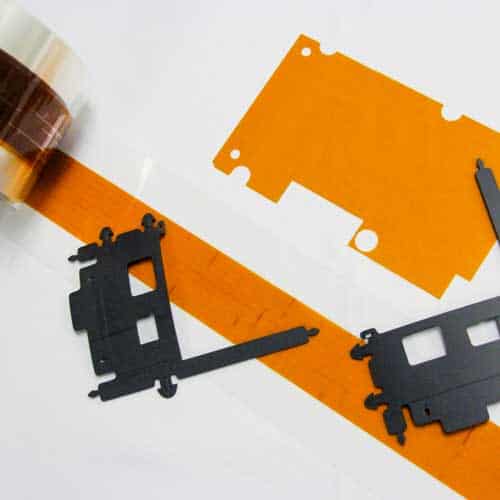
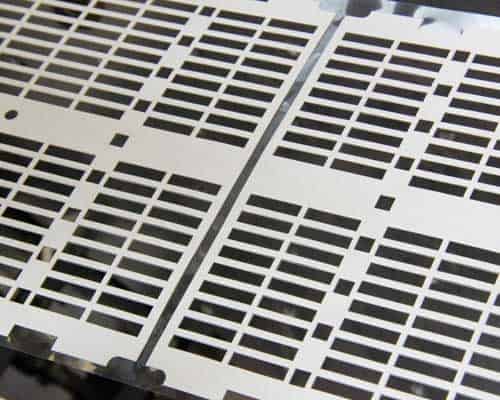
Marian manufactures custom electrical insulators by die cutting thin, flexible, and electrically insulating materials such as plastic films, rubber, fibers, and papers. These materials include Kapton® polyimide films, Mylar® PET film, ITW Formex® (polypropylene), Nomex® aramid fiber, insulation papers (aka fish paper), Teflon® PTFE, solid rubber sheets such as silicone, neoprene, and more. Marian can provide these electrical insulators with or without pressure sensitive adhesive (PSA) backing.

Insulators are designed to prohibit the flow of electric current along unintended paths within and beyond the electrical equipment or device. Insulators preserve the designed function of the electrical component while protecting adjacent components, devices, and users.

Die-cut electrical insulators

Custom Electrical Insulation Materials and Their Properties

Dielectric Strength: A Key Property

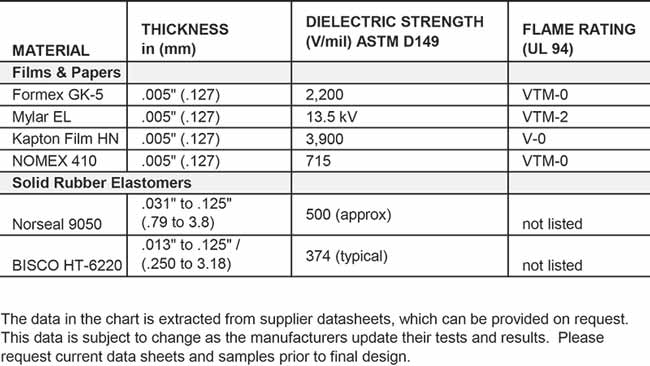
Dielectric strength is the maximum electric field/electric voltage required to produce an electrical breakdown through a material. The higher the dielectric strength, the higher the material’s resistance to the flow of current. Dielectric strength is a key characteristic for materials used to design electrical insulators.
Ultra-thin and Lightweight

Many electrical insulating materials converted by Marian are ultra-thin and lightweight, while also maintaining excellent electrically insulating properties. This makes them ideal for today’s electronic devices as they become smaller, thinner, and lighter.

Additional Physical and Mechanical Properties

The electrical resistivity and dielectric strength varies among a wide variety of materials. Each material provides insulation along with other important performance characteristics such as: flexibility, rigidity, flame retardant, extreme temperature resistance, moisture and chemical resistance, and more. Many materials are also RoHS compliant and UL 94 V-0 rated.

Marian’s Manufacturing Techniques

We manufacture custom electrical insulators by means of die cutting, water jet cutting, and laser cutting. We can also provide secondary operations including scoring, creasing, bending, folding, embossing, screen printing, and PSA lamination to meet your requirements.

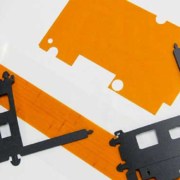
LED electrical insulator

Commonly Die-cut Electrical Insulator Materials

Markets + Applications

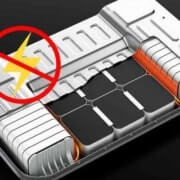
EV Battery Components

Material Properties Chart

The materials in this chart are a few commonly converted by Marian. Please note that this is a very small representation of the thousands of materials in a wide range of thicknesses that we can choose from. Contact us for help with your material selection.

Material properties chart

The Benefits of Custom Electrical Insulators for Your Products

Check Check

Enhanced Safety and Performance

Check Check

Tailored Fit for Complex Designs

Check Check

Improved Product Longevity

Why Choose Marian for Electrical Insulation Solutions?

Calendar Calendar

Decades of Expertise in Die-Cutting

Floppy Floppy

Extensive Material Portfolio and Technical Support

Chart-bar Chart-bar

High-Volume Production Capabilities

Die-Cut Electrical Insulators for Modern Technology

Dot Dot

Miniaturization in Electronics

Thermometer Thermometer

High-Temperature and Harsh Environment Applications

Battery Battery

EV and Battery System Integration

Our Process: From Concept to Component

Pencil Pencil

Collaborative Engineering and Prototyping

Clipboard Clipboard

Precision Manufacturing and Quality Assurance

Dropbox Dropbox

Efficient Assembly-Ready Packaging

Work with Marian

Marian maintains close partnerships with top suppliers of engineered insulator materials. After understanding the thermal, electrical, and mechanical requirements of your application, your Marian sales engineer can recommend the most suitable materials. Material samples and prototypes can be provided quickly for testing.

FAQs About Electrical Insulation

The main purpose of an electrical insulator is to prevent unintended electrical current flow between conductive components. Electrical insulation protects circuits and devices from short circuits, electrical arcing, and component damage. In many applications, insulators also provide mechanical spacing, thermal resistance, and environmental protection to support reliable long-term performance.

Dielectric strength is the maximum voltage a material can withstand without electrical breakdown. It is an important property when selecting electrical insulation because it determines how effectively a material can isolate voltage under operating conditions. High dielectric strength is critical in compact, high-voltage, or high-density electronic assemblies where electrical clearance is limited.

Die-cut electrical insulators are commonly produced from materials selected for their electrical, thermal, and mechanical properties. These include polyester films, polyimide films, vulcanized fiber, mica-based materials, silicone rubber, and electrical-grade papers and laminates. Material selection depends on voltage requirements, temperature exposure, thickness tolerances, flexibility, and environmental conditions.

Marian ensures the quality of its electrical insulators through controlled material selection, precision converting processes, and scalable manufacturing practices. Our in-house capabilities allow us to maintain tight dimensional tolerances, clean edges, and consistent performance across both prototype and high-volume production. This approach helps ensure repeatability, reliability, and application-specific performance.

Yes. Marian offers pressure-sensitive adhesive backing for electrical insulators to simplify installation and improve assembly efficiency. Adhesive-backed insulators allow for accurate placement, reduce handling time, and eliminate the need for liquid adhesives or mechanical fasteners. This is especially beneficial in automated or high-volume manufacturing environments.

Download our FREE technical eBooks!
Link to: Technical eBooks Link to: Technical eBooks
4 Questions to Ask When Selecting a Pressure Sensitive Adhesive
How to Select the Right Thermal Interface Material
What to Consider When Selecting Foam Material for Static Gaskets & Seals
Considerations with Tolerances When Die Cutting Soft Flexible Materials
Pros and Cons of Designing with Silicone Rubber
What to Know When Selecting Pressure Sensitive Adhesives for Wearable Medical Devices
Marian Certifications