
Die-Cut Solutions and Components for Electric Vehicle (EV) Batteries
Marian is a world leader in manufacturing die-cut electric vehicle (EV) and battery components. In addition to providing solutions for the automotive battery market, Marian manufactures non-automotive battery components for electronics, medical devices, and more. With ISO 9001 and IATF 16949 certifications, Marian’s quality management systems are set up to meet the strict demands of the transportation industry. Marian can provide rapid turnaround on material samples and prototypes while also offering design assistance and collaboration.
Innovative Die-cut Solutions for EV Battery
Battery / EV Solutions
Battery Cell
The battery cell, the basic energy producing unit of the EV battery, must endure shock transmitted during driving and withstand high and low temperatures.
Marian Solutions:
- Compression pads
- Thermal interface components
- Insulators/barriers
- Flame barrier
- Anti-propagation/thermal runaway
Battery Module
A stack of cells are assembled into a frame and contained in a module to protect contents from heat and vibration.
Marian Solutions:
- Joining
- Insulator/barriers
- Thermal interface components
- Gaskets/seals
- Flame barrier
- Anti-propagation/thermal runaway
Battery Pack
The modules are assembled into a final package with various control/protection systems such as a battery management system (BMS) and a cooling device.
Marian Solutions:
- Gaskets/seals
- Thermal management
- Insulators/barriers
- Cooling insulation
- Anti-propagation/thermal runaway
Battery Management System (BMS)
The Battery Management System’s primary functions include provisions for increased safety during charge/discharge, longer life, state of operation (including state of health and state of charge), and monitoring temperature and cell imbalance. BMS communicates, computes, monitors, and protects the battery pack.
Marian Solutions:
Charging
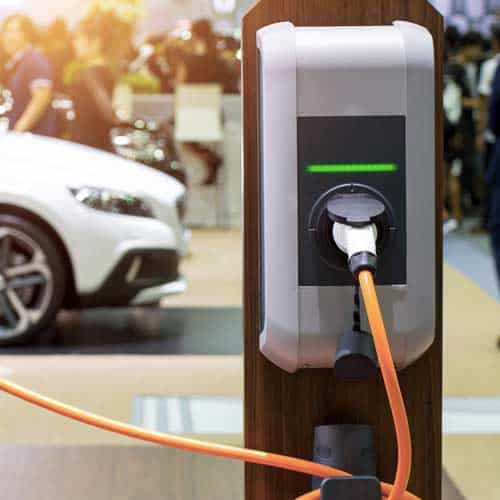
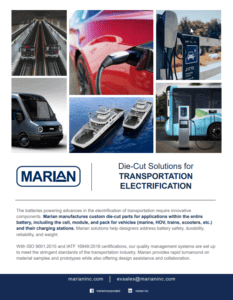
EV Charging systems are complex electrical enclosures. Charging stations and plugs are exposed to environmental elements such as rain, snow, ice, wind, and an extreme range of temperatures. The enclosures must meet specific industry standards including UL and IP ratings. Additionally, the high electrical current and sophisticated electronics of the system create potential for electromagnetic interference issues.
Marian is a leader in manufacturing custom high-quality gaskets that will protect sensitive components from moisture, dust, and electromagnetic interference for the long life of the EV charging system.
- Rogers BISCO® Silicone Foam
- Rogers PORON® Polyurethane Foam
- Rogers PORON® AquaPro™
- Saint Gobain Norseal® Foams
- Acrylic foam tapes (3M™ VHB™, tesa® ACXplus)
- EMI/EMC materials: copper and aluminum foils; conductive tapes and foams
Marian Solutions:
Die-Cut Components for EV Batteries

1. Thermal Management
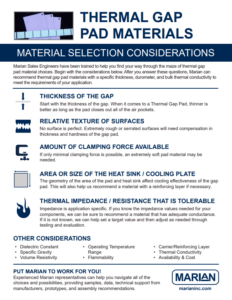
Batteries produce heat when charged or discharged. This heat must be removed, as excess heat can reduce the battery’s performance and limit the life of the battery. Die-cut thermal interface components provide effective heat transfer within the battery cell, pack, and module. Marian manufactures thermal gap pads, phase change, and graphite components to solve these issues and to increase battery life. Key thermal management material suppliers include Fujipoly, Qnity (Laird), 3M™, tesa®, Saint-Gobain, Neograf, and Polymer Science.
Additionally, prevention and suppression of thermal runaway propagation within battery cells and modules ensures battery and EV safety. Marian converts a variety of flame-resistant materials that meet specific UL requirements. Some materials include 3M™ Flame Barrier, ITW Formex®, and Rogers BISCO® Silicone Foams.
Check out this Webinar! In October 2022, Marian teamed up with the team at tesa® to present a webinar as a part of the Charged EV Virtual Engineering Conference. The topic addressed was ‘Managing Heat in EV Battery Packs with Adhesive Tapes and Precision Converting’. Register to view here.
2. Seals + Gaskets
The sealing of the battery module and battery pack is critical to its operation. EV battery components within battery modules and packs are often enclosed between upper and lower housings. Seals between these two housing elements protect sensitive components from water, dust, and air ingress. Seals also assure any dangerous materials are contained in the event of a collision. Selected gasket and seal materials must withstand extreme temperatures and are often required to be UL94 V-0 rated, passing horizontal and/or vertical burn tests.
Marian can be a great help in material selection. We maintain strong partnerships with leading raw material manufacturers such as Rogers Corporation, 3M, Zotefoam, and Armacell. Rogers BISCO® Silicone, PORON® Urethanes, and Saint-Gobain Norseal® Foams are excellent for EV battery gaskets and seals. These materials exhibit great compression set resistance while offering long-term proven performance at extreme temperatures. 3M™ VHB™ double-coated acrylic foam tapes can also be used to join and bond materials while sealing out moisture and dirt.
Visit our Gaskets & Seals page to learn more.
3. Dielectric Barriers + Insulators
Dielectric barrier materials and flame barrier films are integrated into the battery components to meet rigorous electrical barrier and insulation requirements to keep the battery running safely. These materials often double as thermal barriers and insulators as well. Materials are lightweight, flame retardant, and easily converted to meet unique application requirements. Marian manufactures custom components from materials such as ITW Formex®, Lexan™ films, Kapton® Polyimide films, and 3M™ EMI/EMC materials.
Visit our Electrical Insulation page to learn more.
4. Spacers + Compression Pads
Compression pads and spacers within the battery module must be firm enough to hold the battery cells in place while also maintaining compression as the cell expands and contracts. They must also exhibit long-term performance at a range of extreme temperatures and conditions. Marian is a leading converter for many compression pad foam materials including Rogers PORON® polyurethane, Rogers BISCO® silicone, and other neoprene-based foams.
Rogers PORON® and BISCO® are ideal for battery cell pads because the material offers reliable compression set resistance and stress relaxation performance over a broad range of temperatures and conditions. Additionally, foam pads also isolate and dampen noise and vibration (NVH/BSR) caused by vehicle operation.
5. EMI Shielding
Maximize performance of batteries and other electronics within the vehicle by shielding against electromagnetic interference. A large electromagnetic field is often produced by the operation of the battery and connecting cables. This can interfere with other electronics within the vehicle. Conductive elastomers, foils, seals, and pressure sensitive adhesive components can help properly shield from EMI. Marian manufactures converted parts with copper foils, aluminum foils, and conductive PSA. Key EMI/EMC material suppliers include 3M, Polymer Science, and Saint-Gobain.
Visit our EMI Shielding and Grounding page to learn more.
6. Anti-Propagation
Enhancing safety is becoming increasingly urgent for electric vehicle development. Li-ion batteries produce a significant amount of heat while in use and while charging. Along with the use of thermal management materials, placing extremely high temperature-resistant materials between the components of the battery cell, module, and pack can assist in mitigating thermal runaway. Materials include films, fibrous papers, felts, intumescent foams, and composites.
7. Flame-Retardant Adhesives Tapes
Marian’s partnerships with the top adhesives producers globally allows us to offer the largest assortment of flame-retardant pressure sensitive adhesive tapes. Growing demand from OEMs are that all components within the pack be UL rated, and adhesives are no exception. Single-sided film, transfer, and double-sided tape constructions are all available as flame-retardant options as well as halogen-free tapes.
Manufacturing Excellence in EV Battery Components
Marian’s manufacturing approach for die-cut solutions for electric vehicle batteries is built around precision, repeatability, and alignment with automotive supply chain requirements. Our focus remains on producing reliable die-cut components for electric vehicle batteries that integrate cleanly into battery assemblies while supporting thermal, electrical, and mechanical design objectives.
Certified Quality Standards
Manufacturing for EV batteries and electric vehicle batteries demands disciplined process control and documented quality systems. Marian operates under ISO 9001 and IATF 16949 frameworks that support consistency across production programs serving EV battery manufacturers. These standards guide material traceability, dimensional verification, and process validation throughout the production lifecycle.
Battery assemblies are often exposed to extreme temperatures, vibration, and environmental stress. Certified systems help ensure that custom components such as compression pads, electrical insulation materials, and EV battery gaskets are produced to specification and supplied with reliable quality.
Precision Converting
Marian applies precision die cutting and advanced converting processes to manufacture battery components used within the battery cell, battery modules, and battery pack assemblies. Die cut materials are converted to exact profiles to fit within upper and lower housings, supporting consistent placement around sensitive components.
Precision converting enables reliable integration of thermal management, heat shielding, and electrical insulation parts. They include graphite components and double-sided tape constructions without introducing excess material or assembly variability. These die-cut solutions are designed to support manufacturability while helping manage heat flow, insulation spacing, and component alignment.
Global Supply Capabilities
Marian’s global manufacturing footprint supports scalable supply for the EV market, allowing customers to source cut solutions aligned with regional production needs. Coordinated processes across locations help ensure that die-cut solutions for EV battery applications maintain consistency, whether supporting pilot builds or ongoing production volumes. This approach supports predictable delivery while maintaining quality expectations across international battery programs.
Why Choose Marian for Die-Cut EV Battery Solutions?
Here are the key reasons to choose Marian for die-cut EV battery solutions:
Proven Industry Expertise
Marian brings long-standing converting experience supporting electric vehicle, battery, and electronics applications. Our teams understand the functional requirements associated with battery management system enclosures, thermal runaway mitigation layers, and thermal runaway propagation barriers. At the same time, teams remain focused on component-level manufacturing rather than system performance.
Strong Material Partnerships
Through established relationships with leading material suppliers, Marian converts materials suited for thermal management, electrical insulation, and sealing applications used within electric vehicle batteries. These partnerships support informed material selection for applications impacting battery life and long-term durability.
Customer-Centric Approach
Marian works directly with the customer engineering and manufacturing teams to deliver die-cut solutions for electric vehicle batteries that align with assembly methods, volume expectations, and EV safety considerations. Our role is to manufacture precisely converted components that integrate efficiently into battery systems while supporting customer design intent.
Blog Posts
 4 Insulating Materials for use in EV Batteries
 Complex Electric Vehicle Battery Components
 Why P-THERM® Gap Fillers Are Essential for EV Battery Design
 The Best Thermal Gap Pad for Your Design
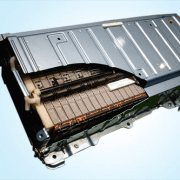 4 High Performance Thermal Barrier Materials for EV Battery
 PORON® EVExtend For Use In EV/HEV Li-ion Pouch Cell Batteries
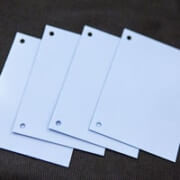 11 Considerations When Selecting TIM for EV Li-ion Battery
Related Resources
Solution Case Study: Rogers PORON® Helps EV Manufacturer Solve Charge Plug Problem

In this success story from our trusted material supplier, Rogers Corporation, an electric car manufacturer found a leak in the charging plug enclosure during pre-launch testing. Rogers provided a gasket made with PORON® AquaPro 37™, which has an excellent compression set resistance. The new and improved gasket will seal out moisture for the life of the automobile.
EV Battery Die-Cut Components – FAQs
Why are die-cut components essential in EV battery manufacturing?
Die-cut materials play a critical role in EV batteries by managing heat, preventing electrical shorts, and ensuring structural integrity. Thermal interface materials like gap pads and thermal tapes transfer heat away from battery cells, preventing overheating and extending battery life. Insulators and gaskets prevent electrical current from traveling unintended paths, reducing short circuit risks. Compression pads maintain proper cell spacing and absorb vibration, while adhesives and seals protect against moisture and contamination. These precision-cut components work together to optimize battery efficiency, safety, and longevity.
How do die-cut materials improve EV battery safety and performance?
EV batteries contain numerous delicate and critical components, all of which are essential for the safe and long-term operation of an electric vehicle. By die-cutting components for EV batteries, you can guarantee the precisely cut component is engineered to exact specifications, ensuring reliable protection and optimal battery performance. Helping the battery components run as intended allows the battery to perform better for longer while keeping passengers and pedestrians safe.
Can die-cut insulators withstand high-voltage environments?
Die-cut insulators block electric current from traveling where it shouldn’t, keeping electricity contained within its intended path. This protects the battery’s performance, prevents damage to surrounding parts, and ensures user safety. Common materials we convert for battery insulation include ITW Formex® polypropylene and Kapton® polyimide film.
What role do thermal management die-cut parts play in electric vehicles?
Thermal management is essential for electric vehicle batteries. By using die-cut thermal components, heat is safely and evenly dispersed from the source, ensuring operational efficiency and preventing failure. Die-cut thermal components are light, consistent, and easy to install, while also being cleaner than thermal grease.
How does Marian ensure precision and compliance in EV battery die-cutting?
Marian uses state-of-the-art converting practices for EV battery components. By providing us with a CAD file of your design, we can ensure your part is converted exactly the way you intended. With cleanroom converting capabilities and ISO 9001 and IATF 16949 certification, we can meet any expected compliance standards for EV batteries.