Custom Precision Die Cutting Processes and Solutions
Broad Die Cutting Capabilities
Marian uses a variety of precision converting processes to manufacture high quality die-cut solutions for your applications. Our teams ask the important questions about your application like operating environment, required tolerances, placement method, substrates that will be in contact with your parts, and more. These questions point us to the best processes for your application. Knowing these details from the start results in cost savings and increased efficiency.
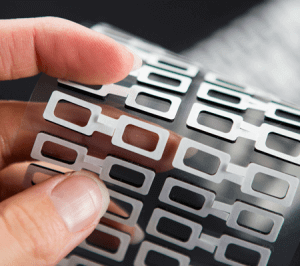
Our die-cutting processes convert and combine multiple thin, flexible materials like tapes and adhesives, foams and sponges, silicone foams, meshes, filters and fabrics, thin metals, plastics and films, and rubbers for custom, multi-layer components across all industries.
Marian is considered to be the best die cutter in the world. With over 1,000 die cutting machines worldwide, our converting capacity is unmatched. Contact us to discuss your precision die cutting needs and read below to learn more about our many converting processes.
Die Cutting Processes
Rotary Die Cutting
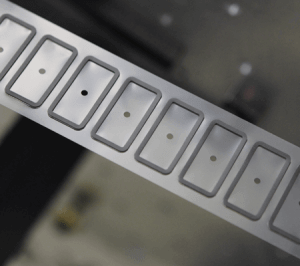
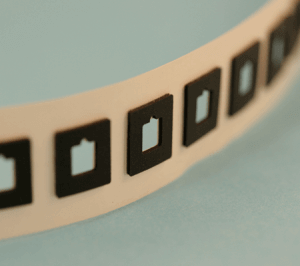
This process uses cylindrical dies on a rotary press. Rolls of materials are fed through the press where the rotary die cuts shapes, holes, and any perforations and creases the part requires. Rotary die cutting is high-speed with high precision. It delivers tighter tolerances than other die cutting methods, while offering good repeatability and high-volume output.

Why Choose Marian’s Die Cutting Services?
Marian’s precision die-cutting services combine engineering expertise, controlled manufacturing, and process repeatability. Each project is evaluated for material behavior, stack-up requirements, placement needs, and tolerance expectations to ensure dependable performance from prototype through production.
Custom Die Cutting Service Tailored to Your Design
Our engineers align custom die-cutting services with the functional and dimensional needs of each application. By reviewing geometry, adhesive interaction, and required tight tolerances, we determine the most suitable die cutting process, including rotary die cutting, steel rule die cutting, flatbed die cutting, laser cutting, or kiss cutting.
This supports die cut parts with clean edges, accurate profiles, and custom shapes produced from a broad range of materials used across different industries. Whether parts require single-layer features or multi-layer constructions, our approach ensures the desired shape and assembly fit.
Global Capacity with Unmatched Precision
Marian’s global footprint supports programs needing consistent output, from engineering samples to high-volume production. Shared equipment families, such as rotary die platforms and steel rule dies, allow every facility to maintain high precision and, when required, extremely tight tolerances.
Teams follow harmonized procedures so each precision die-cut component performs reliably when introduced into a customer’s production line. This structure benefits manufacturers who need synchronized supply across regions or multiple final assembly locations.
Cost-Effective Solutions with Minimal Material Waste
Efficiency guides tooling design, material selection, and process sequencing. Decisions around a custom die, rotary die cutting services, or flatbed die are based on part geometry, volume, and material utilization goals. Controlled nesting and optimized setups help minimize scrap and deliver cost-effective outcomes.
Whether converting foams, films, adhesives, or other die cut materials, our teams focus on stability, repeatability, and consistent quality throughout the manufacturing process. This approach ensures die-cut products made from different materials are produced to specific shapes and aligned with defined performance requirements.
In-House Tooling and Machine Building for Faster Delivery
Marian designs and builds custom converting equipment internally, enabling faster iteration, shorter lead times, and tooling tailored to application needs. This enhances responsiveness for early builds and supports high-speed converting as programs scale. In-house capabilities also ensure that each tool integrates seamlessly with our custom die cutting, precision cutting, and lamination workflows, strengthening overall process control.
Industries We Serve with Precision Die Cutting
Marian’s die-cutting solutions support applications requiring accuracy, material compatibility, and assembly-ready performance across a wide set of manufacturing environments.

Automotive & EV Components
We convert die-cut parts for sealing, bonding, thermal interfaces, vibration control, and insulation. Processes such as rotary die cutting, steel rule, and laser cutting are selected based on part geometry, program phase, and target production volumes.

Medical Devices & Healthcare Applications
For the medical industry, we manufacture die-cut medical components, including gaskets, fixation layers, barriers, and multilayer constructions. Material stability, regulatory expectations, and functional needs determine the appropriate die-cutting service and material stack-up.

Consumer Electronics & Industrial Application
Applications include bonding layers, insulation, shielding, protection films, spacers, and display interfaces. Custom precision die cutting enables crisp edges, intricate designs, and consistent output that supports automation and assembly efficiency across different industries.
What is die cutting?
Our blog post, Die Cutting 101, explains the basics of die cutting.
Building Our Die Cutting Machines In-House
Marian’s in-house team of design, electrical, and mechanical engineers work together to build and design the machines for our various converting processes. These machines are used exclusively at our locations around the globe to provide unmatched customization and capacity to our customers.
Our capabilities set us apart from competitors and offer the following benefits:
- No capital cost passed onto our customers.
- Expanded and unique capabilities.
- Tooling design to reduce scrap and achieve design goals.
Blog Posts



FAQs on Precision Die Cutting
What Are Precision Die-Cutting Services, and How Do They Work?
Precision die cutting is a manufacturing process that uses specialized tools to cut thin, flexible materials into exact shapes and sizes. At Marian, we use steel rule dies, rotary dies, lasers, and other cutting methods to convert a variety of materials, and even laminate multiple materials together to create complex, multi-layer parts. Precision die cutting ensures tight tolerances, clean edges, and consistent quality, making it ideal for applications in medical devices, electronics, automotive, and other industries requiring exact specifications.
What Materials Can Marian Process With Custom Die-Cutting Services?
We die-cut a wide range of thin, flexible materials, including tapes and adhesives, foams and sponges, silicone foams, meshes and fabrics, thin metals, plastics and films, and rubbers. Our processes can convert single materials or combine multiple layers to create custom, multi-layer components for any industry.
Do You Provide Small-Batch and Prototype Die-Cut Services?
Marian uses CAD cutting technology, including lasers, blade-cutting plotters, and waterjet cutting, to produce prototype parts quickly without the expense and lead time of hard tooling. This approach gives customers the flexibility to refine their design cost-effectively before moving to production. Learn more about Marian’s prototyping capabilities.
How Fast Can Marian Deliver Custom Precision Die-Cut Parts?
Lead times vary based on materials and manufacturing requirements, but speed and reliability are core priorities at Marian. We maintain millions of dollars in raw material inventory to minimize delays and accelerate production. If you have a tight deadline, let us know! We evaluate each request individually and work quickly to meet your timeline.
Do You Offer Global Support and Supply for Die-Cut Components?
Marian operates 12 manufacturing locations worldwide with sales offices in multiple regions. No matter where you’re located, we can die-cut materials and ship directly to your facility.
How Do I Get a Quote for Marian’s Custom Die-Cutting Services?
Simply complete the form here to request a quote, and a Marian sales engineer will be in contact with you shortly.